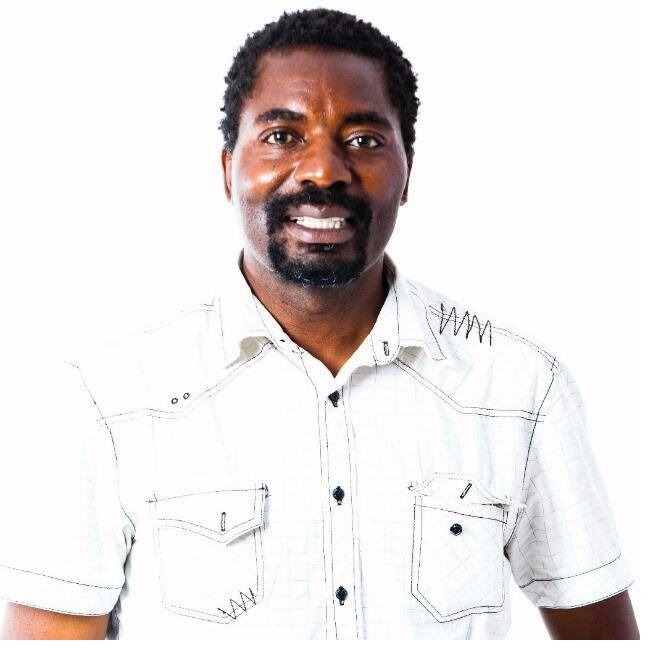
Tuesday, 29 November 2011

Tears for Ken ‘7yrs’ Siyabu


Lucius Banda is the one who first called the Late Ken Siyabu ‘Seven Years’. It was because he was born on February 29 and usually four years elapse before those born on this date of a leap year can celebrate their birthday.
At the time that Ken Siyabu was working with Lucius Banda for the first time, he had celebrated his birthday for seven years only although he was 22 years old.
I first met Ken in 2006 when he was working at Initial Digital Production, a media production firm that was into music and documentaries.
At that time I was deputy chairperson of Lilongwe Press Club, a grouping of journalists of central region and Rasta Ezaius Innocent Mkandawire working for the press club secretariat was pioneering a documentary to do with food security in Salima and he had taken me there to check on Ken who was applying to the documentary his video editing wizardry.
 In their production studio there were only the two of them; Ken and Prince Donda and fate had it that both had to be employed at MBC, later in the years.
From the first day that we met we clicked and we have never known any discomfort or displeasure with each other’s company.
A smile on Ken’s lips was a permanent fixture; even under intense pressure on any project he could still afford an infectious smile for all those around him.
When you could be watching a movie or an international music video, while you would be captivated with its storyline, Ken would be pointing you to areas within such video production that were oozing with ingenuity.
We loved the same genre of music and we used to discuss that as a country, we were not doing enough to promote such a genre and he used to say there will come a day when he will do something about it.
Indeed he started the Dancehall programme on television, those who used to watch it can testify that this was one of the few video graphical innovation on display on our television station.
I witnessed Ken Siyabu working on the videos for Lucius Banda’s album ‘Survivors’ especially the ‘Zakukhosi’ track; how he explained on what he wanted to do with the video was a complete sign of great things in store for him.
Ma Blacks and Lucius are the country’s top billed performers and Ken handled their video projects with aplomb. Ever watched the ‘Dalo’ video?
On Saturday evening last week Lucius performed at Key Lounge in Mzuzu a few days after burying Ken and when he took over the stage he observed a minute of silence in honour of the fallen Giant.
The following Sunday at Mzuzu Hotel’s Boma Park, he played ‘Nthawi’ from the ‘Freedom’ album as an honour to Ken who handled its video.
It must have been on October 11, 2011 that I last met Ken. It was in Eswazini in Mzimba during the installation of Inkosi Kampingo Sibande. He had come with Dr. Rupert Poesch? A German Researcher who for years on end has been recording cultural practices of the Ngoni people.
They had brought state-of-the-art Sony Videos Cameras and in his own words, he had told me that the machines were the latest on the market. The German was manning one, the other one was manned by Lawrence Nyale while Ken handled the other one which had a roving mounting like one used in film making. He went on to school me on how sophisticated the machine was and how unbelievable its ability was.
He explained to me about his collaboration with the West, how he used to travel to Germany to edit the materials he was collecting and more dreams that clearly removed Ken from the common experts doing his very job and placed him above all.
You know one thing? He accused me of not writing about his efforts; he said after discussing about reggae, ragga and dancehall at least he had started something and I never showed any initiative to write about him.  
I promised Ken that I will write about him, comfort in the feeling and knowledge that he would outlive me since I am of old age, but I never at any second imagined that the next thing I will write about Ken I will be eulogising his beautiful life.
Ken was a brethren who never shared the same womb with me, his artistic gift only endowed in him by the ALMIGHTY was everything that we cherished as his friends, brothers, colleagues and cronies.
I have struggled with PAIN to cry for KEN here and I am trying so hard not to over bereave him – whatever this means – but celebrate him.
Sorry Ntcheu, death has overstayed on your veranda, robbing us of the sons you gave us to serve in the world of music. After Lovemore Mwanyama, now it is Ken.
Go ye well Brethren Ken ‘7yrs’ Siyabu; Rastafarie Liveth!!!!!!
Feedback: drummingpen@columnist.com


Tuesday, 15 November 2011

When Blacks invaded North Again


After two years, the reggae outfit The Black Missionaries toured the Northern Region again. Did the people in the region miss them? Were they up to the mark?
The first show on the Mzuzu tour on the night of November 4, 2011 at Key Lounge which preceded the Mzuzu Hotel Boma Park show on November 5 afternoon proved the same fact that the band still holds sway.
The record turn-out in the two events talked volume of what respected the band is in the region even in the face of being glossed over by the band which never gave a plausible reason for a 2 year gap that the region had to endure with.
The northern region in general and Mzuzu in particular is still considered as the backwater. Even the region’s own Mtebeti Wambali Mkandawire chose to launch his ‘Liberty’ elsewhere and never repeated the act anywhere near the centre where he is now doing his missionary work.
Let me not digress, but talk the Blacks Tour in the north; the band showed that it is still as tight as ever in terms of performance.
This is one of the only few bands that seem to take the audience down the road they are very familiar with. It manages to light the dancing floor with fire and douse it whenever necessary, more so when people are on the verge of collapse with over excitement. The band also rekindles the fire when only ambers are visible.
Meaning, they have realised they have the power of drugs to an addict. They know when to give a fix and how well to punish the addict.
Apparently, they seem to be so serious with what they intend to dish out so much so that they tell you that they were training before bringing the music on. Chumbu, Moda Fumulani, Anthony ‘Mr. Cool’ Makondetsa and the band seem to be talking one and the same language.
Of course at Key Lounge, a big letdown was the size of the venue and even the down pour which found its way right on the dance floor even when it hitherto boast of a roof above.
The art of chaining a number of sings without faltering and denying the audience of quality was also evident on the tour, which but exposed the band’s rigidity to play only what they practice making you want to attend a single show and decide not to attend any subsequent one because you know their act.
Why live shows are called live, is because they somehow tend to be experimental moments for the band. It is risky of course but worth trying because this is what has pushed bands to the stardom. The reason lead vocalist says “take it down,” only when it has started is because it is live.
Anthony Makondetsa tries it with ‘Mbumba ya Abraham’ but it looks over rehearsed and steals the thunder it is supposed to effect on the audience.
The Key Lounge tour also revealed to the region that Chizondi the master keyboardist for the Blacks has come of age. This was apparent when everyone was surprised when Anjiru moved back on the backing queue when his young sibling took charge berried out “Pamene tiyenda mu Mthunzi wa imfa; sindizaopa zowopyazo, Yesu zandigwira zanja”…
Yes, with this track which I always say was Msamude’s parting shot and how Chizondi handles it reminds me of Gramps Morgan and how he juxtaposed his leading vocal charge with that of the front man Peter ‘Peta’ Morgan.
I would not want to talk about the audience response at Key Lounge because of the influence that alcohol had over the audience. Anything was danceable although on a few occasions; legs would be seen hanging in the air because the sound could just cut off or because one drunkard had decided to jump on a speaker as a sign of excitement, which the speaker would not take kindly as it crashed down with such a crazy imbiber.
Talk of the Mzuzu Hotel Boma Park show; very few would be seen dancing at times, while many more would be seen appreciating the musicality oozing out of the band as it played, reminding me of how the Dutch audience is taken spell bound my performances in a musical hall in Amsterdam of Salif Keitha for example, when they miss out on what the lyrics are saying but not what the music is communicating.
Like I argued when the band released Kuimba 8, I still would reiterate my position on the band’s output.
The show was still apparent that the Black Missionaries still continue a journey started by founder Evison Matafale which was taken over by Msamude when Matafale fell and taken over now by Anjiru when his elderly brother equally fell as well.
I should believe very soon we will have Kuimba 9 and this is the time the current Blacks should attempt to stir very far away from their traditional songs.

Last time I said when you are listening to the tracks from a distance where you are missing out on what the lyrics are saying, you are bound to think this is one of the many old tracks from the blacks.
And yet these are the new songs that are same old, same old.

One thing that is very clear is the clinging to the template that Matafale and later, Msamude created.

Anjiru and kid brother Chizondi, Peter Amidu and brothers Takudziwani and Paul Chokani need to rethink their future with the forthcoming Kuimba albums.
This is the time to dismantle the Matafale/Msamude template and come up with their creativity.
Today I still ask the same question as to why people flock to Black Missionaries performances.
 Is it more to do with their pedigree that separates them from the competitors full of mediocrity, than it has to do with whether they are progressive musically or not?
With the Mzuzu tour they proved otherwise and I hope Kuimba 9 will say the same.
Feedback: drummingpen@columnist.com


Wambali at Liberty


Yes, Mtebeti Wambali Mkandawire is at ‘Liberty’ to come again; and come again he has done and more so in English than in the languages that we have known him for.
I remember some people were once arguing why Wambali does not sing in Chichewa. The reasoning behind this argument was basically based on the fact that he is too good to be singing in chiTumbuka.
To me it was more like wondering or getting angry why Lucius Banda does not sing in chiTumbuka. Your answer is as good or as bad as mine.
It’s not like that Mte. Wambali himself is not aware that Language has played a very bigger stake in his music.
I bought his latest album ‘LIBERTY’ in Mzuzu at the Computer Connections at a price of K1600 where on the sleeve he declares: “Singing in ChiTumbuka comes naturally for me, chiChewa comes second and chiEnglish third.”
The album has 13 songs, let me provide the track titles: The Wonder; Will be there; Liberty; Holy Ground; Chete; The Spirit; Celebrate; Chikondano; King of Glory; The Name; Will Sing; Tiwonge; Satisfy.
When you check this list you realise that ‘Ten’ are in English, ‘Two’ thus Chete and Chikondano in Chichewa and taken from the Chichewa Hymn book and another one in Tumbuka.
Listening to Wambali at liberty with English language you would mistake his voice as being forced to sound somewhat differently. You are left with a nod over his declaration that he is natural when singing in Tumbuka.
One other thing I have noticed with the Liberty album is that he has decided to change the kind of audience that he wanted to target. However, the Mte Wambali signature could be noticed in the instrumentation of this particular ‘liberty music’. As a servant of God he has attempted to use the beat that we have known him with over the years to preach to English speaking folks most of whom are kind of losing faith.
By the way, long gone are the days when people used to come from the West to spread gospel in Africa, apparently the tables have been switched and it is Africans that are going to, or attracting the West with Gospel.  
Not that his previous music lacked the spirituality that goes with gospel, but this particular album brings some meaning of what shade he would want people to view him from. The Cover of the album depicts a silhouette of a man with dismantled chains to show liberation and the right hand holding a guitar ready to dish out music.
But soon after he was born, Mte never learnt music from a language of his mother tongue as he was first introduced to Congolese music where he was born.
Upon his return to his lakeshore home village in Mlowe, Rumphi he was also introduced to South African music by local natives who were returning from the South African mines and it was through the radio, that he came across Western pop music, obviously English songs.
His first band to join was a rock band called the ‘Pentagon’ that played western pop music. But as lead singer of the band it is here that he first started cross-pollinating the genres thus rock music fused with traditional Malawian music.
Since 1977 when he experienced a dramatic religious awakening that led him to pursue religious training in the Christian missions by 1984, by 1989 he went to the UK to study Biblical Cross-Cultural Musicology.
Not in order of year of release, albums that came forth include Ku Mtengo, Kavuluvulu, Kawunjiwunji, Tidzamtamanda, Ntchemo and they came until the 13th Album Liberty.
For the outside world “Zani Muwone” released in 2002 and produced by JB Arthur, co-founder of the Instinct Africaine label, together with Sibusiso Victor Masondo, and owner of Joe’s Garage Recording studio in Johannesburg brought him popularity in South Africa and more popularity in Malawi.
This led to performance at the NORTH SEA JAZZ FESTIVAL 2002 in Cape Town besides winning many international awards including being the first African to win the WIPO (World Intellectual Property Organisation) AWARD FOR CREATIVITY with Zani Muwone album. The standing of this album never lost its grip to the 2007 album ‘Moto’ that led to his retirement from public performances.
“Zani Muwone” also earned him KORA AWARD Nomination in the “Best Artiste from Southern Africa” category. He also won SAMA Music Award - for Best African Artiste – 2003.
I might therefore look too junior to discuss his music, but I should nonetheless say it here that listening to his latest album ‘Liberty’ you are like lost in a jungle that at first looked familiar, only to realise that it is a maze that you cannot escape from.
He seem to realise the gigantic shift the album has made from the previous albums going by his declaration on the album sleeve: “As Africa stands on the verge of the next spiritual revival and I am reminded that every revival comes with its own music”.
I should believe this is the explanation of the strange effect the album is leaving if one compares it with the last 12 albums.
Feedback:drummingpen@columnist.com

Suffix & Faith show Boldness in tackling tribalism

The timing to issue the song Yobwata by Suffix and Faith Mussa would not have come at the right time considering that this is voting time a...